Our attitudes towards persons with disabilities and chronic illnesses are informed by the society we are a part of.

Put in healthy into Google and images of healthy foods are interspersed by very thin models eating healthy food. Put in working out and you get nothing but able bodies running, exercising, lifting weights, and the like. All abled body.
There is a not so subtle message at play:
healthy is defined by a certain weight and physical capabilities.
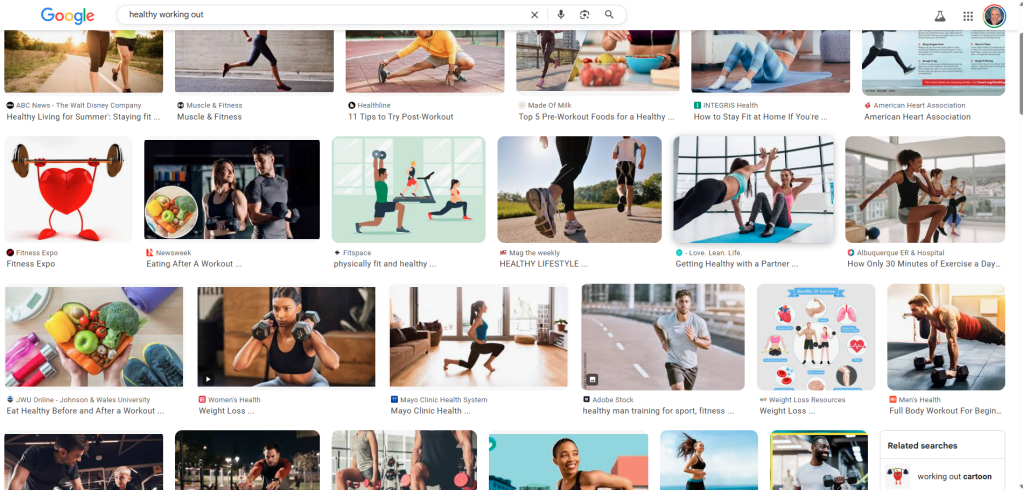
There isn’t a normal average-weight person to be found in the first seven rows of pictures and graphics under working out. Even the cartoon people are in good shape. They certainly aren’t thinking about this guy. (I apologize I can’t embed this video but is worth clicking on.)
A lot of this has to do with the advertising industry’s unwillingness to boost the signal of the disabled and chronically ill, the guy above notwithstanding. A lot has to do with the pharmaceutical sector benefiting from pushing the ideal weight as some uniform number that we can all obtain and strive for.
Your attitudes about the wellness and well-being of others are informed by the advertising, medical, and pharmaceutical sectors. You are a mental patsy. Spitting back dogmatic views about health and wellness that are interfering with your capacity to be compassionate and loving to other body types and capabilities.
This is why you wonder if the person who is overweight couldn’t just improve their circumstances with a diet and some exercise instead of wondering if their thyroid is broken or that a healthy weight for them is different than a healthy weight for you. We see healthy foods and wonder why people can’t just eat better when junk foods cost less than vegetables and healthy proteins. We don’t think about the statistic that 25% of low-income people live with disability (as compared to 12% in other income brackets, staista.com, accessed in April 2023. Making them at a disadvantage when it comes to getting into a grocery store with vegetables and healthy proteins, much less being able to afford healthy foods. Run down to your local food pantry and see how much produce is available. Typically, none. But cheap Ramen, cookies, and candy are plentiful because they are cheap and have a long shelf life.
Where there is a will, you say, there is a way. This, too, is part of the usually unattainable standards set by society to blame the victims of poverty, injury, and illness for their lot in life. Instead of holding society responsible for ministering to the “least of these” (Matthew 25:40).
If you are okay with these societal attitudes, I encourage you to let your thoughts and actions towards others remain unchallenged. Or you could start questioning whether your highest self has shown up or if it is the programming that society has given to you. You could actively involve yourself in not judging people who ask or need accommodations. You could actively participate in self editing your thoughts when they come up as judgmental. When someone is hurt you could show compassion instead of having a, “Suck it up,” attitude.
Most importantly you can remember that your body is yours and their body is theirs.
It is called Bodily Autonomy, the right to make decisions about one’s own body, life, and future without coercion or external interference. Yet you don’t mind being coercive or judgmental and sometimes even mean. You want to cry bodily autonomy when it comes to significant issues like choice, contraceptives, and the right to healthcare. It just seems a step too far to say that weight is also a choice that bodily autonomy guarantees. Yet somehow, if their weight isn’t societally acceptable, then it is okay to judge someone as lazy, unmotivated, and undisciplined. Which is also an arbitrary rate based on some normalized standard by industries with billions to gain by enforcing these views of health and beauty.
Those of us who are disabled and chronically ill don’t have bodily autonomy. We are at the whims of a body that is coercing and interfering. We are restricted and restrained by wear and tear, traumatic injury, and broken DNA. Often, our disease is beyond the realm of cure. Our bodies are slowed down by disease and injury, and medications have far-reaching side effects that sometimes are as bad if not worse than, the disease or injury itself: addiction, weight gain or loss, arthritis, nausea, diarrhea, and random pain. Often all of this is unable to be detected by the outside world, by you.
Yet you have all the reasons in the world to judge and interfere. Ask “what if” questions as if the person who has been injured or is ill hasn’t thought about any alternative to relieve a portion of their suffering. Or a judge based on weight or physical capability, limiting the access and support needed to do simple tasks.
You could be a powerful advocate for change by simply monitoring your thoughts and judgments. Or you can continue to be a mental pasty for societal views that are outdated, antiquated, unhelpful, and unkind. The choice is yours.
Here are some phrases that you unknowingly use that are considered ableist.
Cripplingly/crippled by/a crippling degree of ______
Your acting bipolar, What a schizo, ect.
I’m so [insert disability here] when you are not
Fall on deaf ears, turn a blind eye, ect.
You don’t LOOK disabled.
Wheelchair-bound/confined to a wheelchair
Suffer from/handicapped by [insert disability here]
You’re such an inspiration!
For further context: read this article from Drew Dakessian about Ableist Language & Phrases That You May Unknowingly Use
 Pagans With Disabilities & Chronic Illnesses
Leave a comment